
Why Legacy VPNs Are Being Replaced By SASE
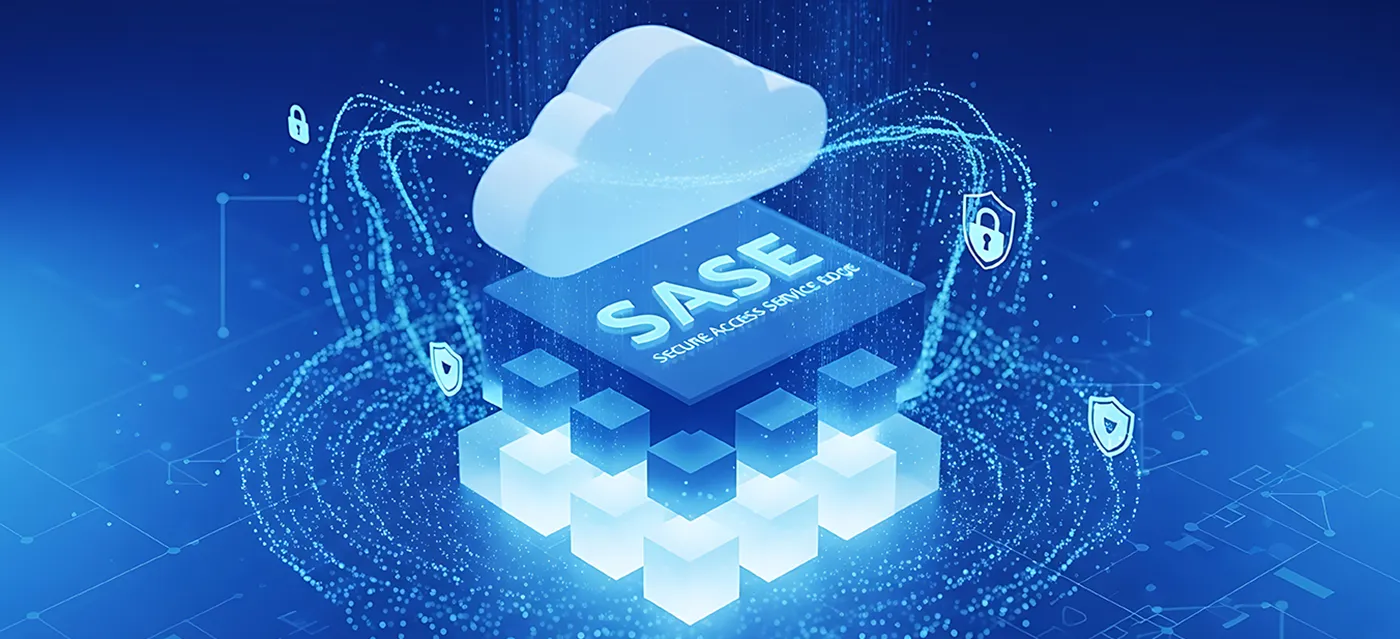
For years, virtual private networks (VPNs) were the standard solution for enabling secure remote access. They were designed for a time when applications and data lived inside the corporate network and users worked from predictable locations.
That world no longer exists.
Today, organisations operate across hybrid environments, cloud platforms, and SaaS applications, with employees working from anywhere. As this shift accelerates, perimeter based security models are showing their limits.
Where Traditional VPNs Fall Short
Legacy VPNs rely on network level trust. Once users authenticate, they are placed inside the corporate environment, often with far broader access than their role requires.
This approach creates several challenges:
-
Increased risk from credential compromise
Broad access makes lateral movement easier for attackers, increasing the potential impact of a breach. -
Reduced performance for modern applications
Centralised routing sends traffic through fixed gateways, even when users are accessing cloud services, resulting in unnecessary latency. -
Scaling constraints
Hardware centric VPN infrastructure struggles to adapt quickly to workforce growth, traffic spikes, or unexpected shifts to remote work. -
Fragmented visibility
Relying on multiple disconnected tools makes it harder for security teams to enforce consistent controls or gain a holistic view of access activity.
A Shift Toward Secure Access Service Edge (SASE)
These limitations have driven enterprises to rethink how access should be delivered. Rather than extending a shrinking perimeter, security strategies are evolving to protect users, applications, and data directly.
Secure Access Service Edge (SASE) brings networking and security together in a cloud native model built for distributed environments. It aligns security with how work actually happens today.
How SASE Changes the Access Model
-
Zero trust, application level access
Users connect only to the applications they are authorised to use, reducing unnecessary exposure. -
Consistent security at cloud scale
Traffic is inspected and protected close to the user, without sacrificing performance. -
Centralised control and visibility
A unified framework simplifies policy management and strengthens governance across locations. -
More reliable user experience
Optimised routing improves performance for cloud and SaaS applications.
The Bigger Shift
This transition reflects a broader change in mindset — moving from protecting networks to managing access based on identity, context, and risk.
In a cloud first world, security needs to be flexible, scalable, and built around users rather than locations. For many organisations, this means the legacy VPN is no longer the best foundation for secure access.